The 6 Most Important Gold Veins in the World and What Makes Them Unique
The price of gold reached historic highs after a strong rally at the beginning of 2026. In a context of inflation, geopolitical tensions, and volatility in financial markets, investors are once again turning to gold as a store of value, a strategic asset, and a global economic barometer.
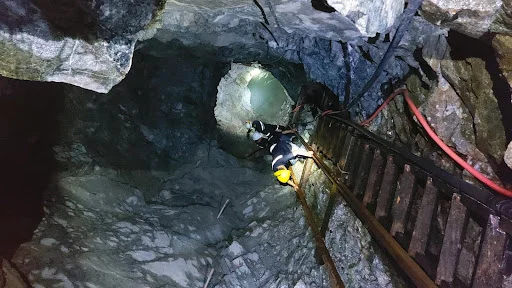
Behind this record-breaking price performance are the great gold-bearing veins that sustain the global supply of this precious metal.
Some of these geological formations stand out for their history, their modern exploration and mining models, and their continued projection as fundamental assets for the future of global gold mining.
-
Witwatersrand Basin – South Africa
In first place is the Witwatersrand Basin in South Africa, considered the richest gold vein in history. It has contributed more than 40% of all the gold ever extracted worldwide, with reserves still estimated in the thousands of tons despite more than a century of intensive exploitation.
Its deposits are concentrated in quartz-rich conglomerates of the Central Rand Group. This basin, located between the cities of Johannesburg and Welkom, has generated more than 57,000 tons of gold since 1886.

-
Nevada Gold Mines – United States
The state of Nevada is home to the largest gold mining complex in the world. The partnership between Barrick Gold and Newmont gave rise to Nevada Gold Mines, a system that integrates multiple large-scale deposits and disseminated gold veins. This district, discovered in 1965 and active since the 1960s, encompasses some of the world’s most productive gold and copper districts, with key mines such as Carlin and Goldstrike.
-
Muruntau – Uzbekistan
Muruntau is one of the largest and deepest open-pit mines on the planet. Its estimated reserves position it among the most important gold deposits in the world, making Uzbekistan a key player in the global gold market. The Muruntau gold deposit is located in the Qizilqum Desert and stands as one of the pillars of international gold supply, establishing the country as the leading gold producer in Central Asia.

-
Grasberg – Indonesia
Located in a remote and mountainous region, Grasberg is one of the most imposing mining formations in the world, rich in both gold and copper. Operated by Freeport-McMoRan, it has been fundamental to the Indonesian economy and to Southeast Asia’s export structure. Now transitioning to underground mining through the Grasberg Block Cave, it estimates probable reserves of 14.2 million ounces of gold and 275 billion pounds of copper, extracting up to 130,000 tons per day using autonomous train systems.
-
Veta del Cura – Colombia (Napoleon Gold Mine)
In Latin America, one of the most historically significant and internationally projected gold veins is located in Antioquia, Colombia, where Napoleon Gold Mine operates in the Veta del Cura (Priest’s Vein). This vein lies within the Segovia–Remedios Gold Belt and is recognized as one of the most important gold veins in South America due to its volume, purity, and geological continuity.
With more than 12 years of experience, active mining titles, proprietary infrastructure, and extraction programs developed under international standards, Napoleon Gold Mine carries out its operations in one of the most productive geological environments in Colombia and the world. This is supported by the geological structure of the Antioquia Batholith, a vast deep rock formation that constitutes the structural foundation of the main gold deposits in northeastern Colombia.
Colombia is one of the world’s leading gold producers, and gold has become the country’s third-largest export product. According to official international trade figures from the Colombian Mining Association, the main destinations for Colombian gold and emerald exports are the United States (38%) and India (14%), positioning Colombia as one of the key countries within the global precious metals supply chains.

-
Olimpiada – Russia
Finally, the Olimpiada Mine is the largest gold mine in Russia and one of the most significant gold-producing operations in the world. Located in the Krasnoyarsk region of Siberia, this massive open-pit mine operates in a remote area characterized by extreme climatic conditions, which makes its scale and production continuity particularly remarkable. Olimpiada is operated by Polyus, Russia’s leading gold producer, and is a cornerstone asset within the company’s global portfolio.